Lawmakers Defy Church Pressure On Gay Marriage - wjz.com
Lawmakers Defy Church Pressure On Gay Marriage
WASHINGTON (AP) ―
D.C. Council members say there's little room for compromise with the Catholic Archdiocese of Washington over a proposed same-sex marriage law.
The church says it won't continue offering social services with D.C. money if the marriage bill isn't changed because it would require the church to recognize same-sex couples. But council members say threats shouldn't determine D.C. laws.
Council member Jim Graham says the church hasn't abandoned social services in New Hampshire, Connecticut or Vermont after they began same-sex marriages.
In Boston, Catholic Charities has halted city adoption programs because Massachusetts bans public discrimination against same-sex couples.
Council chairman Vincent Gray plans to meet with colleagues Friday to discuss the issue.
Friday, November 13, 2009
Lawmakers Defy Church Pressure On Gay Marriage - wjz.com


Argentine judge allows gay wedding in legal first - Yahoo! News
Argentine judge allows gay wedding in legal first - Yahoo! News
BUENOS AIRES (Reuters) – An Argentine judge has granted a homosexual couple permission to get married, setting a precedent that could pave the way for the Catholic country to become the first in Latin America to allow same-sex marriage.
This week's ruling by Judge Gabriela Seijas in Buenos Aires, which became the region's first city to approve civil unions between same sex couples in 2002, may increase pressure on lawmakers to debate a gay marriage bill currently deadlocked in Congress.
"The law should treat everyone with the same respect according to their singularities, without the need to understand or regulate them," Seijas said in her ruling, which could still be overturned by city authorities.
The couple, Alex Freyre and Jose Maria Di Bello, said in a statement posted on a gay rights Internet site that the decision would allow them to become "the first gay couple in Latin America to get the right to marry."
Civil unions in Buenos Aires and several other Argentine cities grant same sex couples some but not all the rights of married couples.
Elsewhere in Latin America, same sex civil unions are allowed in Uruguay and Mexico City.
(Reporting by Nicolas Misculin and Helen Popper, editing by Alan Elsner)
Guessing game in New York - Washington Blade: Gay and Lesbian News, Entertainment, Politics and Opinion
Guessing game in New York - Washington Blade: Gay and Lesbian News, Entertainment, Politics and Opinion
By CHRIS JOHNSON
Nov. 13, 2009
New York’s governor and state Senate leaders announced this week they’re committed to a vote on same-sex marriage legislation by the end of this year.
Gov. David Paterson (D) announced the agreement at a press conference Tuesday while flanked by champions of the marriage bill, according to media reports.
“This is the first time that the Senate leadership had indicated that it will support a vote on marriage equality,” Paterson said, according to the New York Daily News.
Austin Shafran, a spokesperson for the Senate Democrats, didn’t respond to the Blade’s request for comment, but reportedly confirmed for the Daily News an agreement had been made with Senate leaders on the marriage bill.
“We will commit the full spectrum of our energies to making marriage equality a reality in the State of New York,” Shafran was quoted as saying.
Gay state Sen. Tom Duane, a gay lawmaker and prime sponsor of the marriage bill in the Senate, said Paterson and Senate leaders reached a decision to bring the marriage bill to the floor this year “under the leadership of Gov. Paterson, who brought everyone together — the LGBT political organizations, myself, my colleagues in the Senate majority.”
Approval in the Senate is the last major obstacle in passing same-sex marriage legislation in New York. In May, the New York Assembly passed legislation that would grant marriage rights to gay couples, 89-52. Paterson has pledged to sign the bill if it reaches his desk.
The governor has placed the marriage bill on the Senate’s agenda for Monday and Tuesday for an extraordinary session of the Senate, which must also consider legislation that would address the state’s $3.2 billion budget deficit. But the Senate is not required to vote on items the governor puts on the agenda. It was unclear at Blade deadline whether the Senate would take up the marriage bill next week.
Duane said “nothing is ever for certain” in Albany with regard to whether or not the Senate would take up the legislation next week, but added he’s pushing to bring it to the floor at “every opportunity, every time that we’re together, and we’ll be together again on Monday.”
“I do know that the governor is putting it on the agenda, and, again, that shows his leadership on the issue,” Duane said.
Whether there are sufficient votes in the Senate to pass the marriage bill also was unclear. Democrats hold a narrow majority in the Senate, 32-30, and about five Democrats have said they are non-committal or would vote against the bill, according to a report in the New York Times, making Republican votes necessary for passage.
Jeff Cook, a Log Cabin Republicans legislative adviser who has been lobbying GOP senators on the marriage bill, said he couldn’t speak to whether senators would take up the measure next week, but noted he believes the measure will pass this year with Republican votes.
“I believe that when this finally comes up for a vote that it will pass with bipartisan support,” he said. “I am confident that there will be Republican support.”
Duane said he’s “feeling very, very optimistic” about there being enough votes in the Senate to approve the marriage bill.
Asked whether there would be stronger chance for passing the bill later in the year as opposed to next week, Duane replied, “I guess the answer would be who knows, but I’m very optimistic about the bill today.”
But Dan Pinello, a gay government professor at the City University of New York, said he’s “not optimistic” about there being sufficient votes to pass the marriage bill.
“I don’t think the votes are there, quite frankly, but I think it’s important, nonetheless, that the vote be taken because that way people are on the record, and next year, which is the election cycle, they can be held accountable for the votes,” he said.
Pinello said the New York State Legislature “is run by these dinosaurs,” and a vote on the marriage bill — even it fails — would get opponents of same-sex marriage on the record so issue advocates know who to target in the 2010 election.
Paterson was reportedly joined at the press conference by Duane and Alan Van Capelle, Empire State Pride Agenda’s executive director. Key members of the Senate were absent, including Democratic Leader John Sampson, President Malcolm Smith and Majority Leader Pedro Espada Jr.
But Paterson said at the press conference that Senate leaders “will stand behind this commitment” and their lack of presence at the event didn’t mean they weren’t standing by the agreement, the Daily News reported.
“I think that those three leaders would not like to get into the conversation about dates and times,” Paterson was quoted as saying. “They’ve made the commitment. They have not had a chance to meet with their membership as yet, and usually these types of commitments come after meeting the membership.”
The commitment for a Senate vote this year comes after supporters of same-sex marriage had a false start on hopes that the chamber would take up the measure this week. Lawmakers failed to take up the measure Tuesday at the start of the session, even though Paterson put the bill on the agenda.
The Senate began its session at around noon Tuesday, and lawmakers discussed appreciation for U.S. veterans in recognition of Veteran’s Day, then put the chamber in recess. The Daily News reported Senate Democrats went into discussion about the marriage bill in a members-only conference and engaged in “very passionate” debate.
Thursday, November 5, 2009
Enough is Enough
must read Gay apartheid must end
DavidMixner.com - Live From Hell's Kitchen
Over the next weeks, there will be numerous well-meaning proposals to deal with the aftermath of our brutally unfair defeat in Maine. Clearly there are many ways to respond. However, with all the energy I can muster, I have come to the clear conclusion that we can't continue on the path we have been following the last two decades. The time has come for a major shake-up in ideas, tactics and priorities.
Those who hang on to the nostalgia of the past can live in it. There is no question in my mind that the vast majority of the LGBT community is ready to move forward with new visions and new tactics. What is happening to us with this expanding system of Gay Apartheid in America cannot be allowed to continue and if it does, we cannot go quietly into the night enabling such abuse anymore.
How can we have any dignity, honor or pride in ourselves if we validate this continued process of ballot box terrorism? How can we stand tall next to each other if we explain away another's cowardliness? How can we allow people to dehumanize our relationships and our very integrity if we give people passes to sit out the battle for our very freedom? No longer are political timelines a reason for delay, no longer are incremental approaches acceptable and no longer can the political process expect us to be patient and wait our turn. Our turn came long ago and there will be no more waiting.
Our national organizations should be put on notice that we expect more from them and that we want more accountability and more dynamic leadership. For example, who talked to the President about Maine? Why did the White House refuse to become heavily involved? Why was Attorney General Eric Holder's statement not disavowed by the White House? Did we have direct access to the President or not? Wanting to know these answers is fair. Holding organizations that ask for our money and support accountable is not divisive it is common sense. We want leaders and organizations that represent our interests and are not beholden to the trappings of political power. Time to end the cozy relationship between our national leaders and Washington power brokers and start playing tough.
Organizations should follow the role model of Empire State Pride Agenda (ESPA) in New York. They must refuse to allow anyone to speak at their dinners who is not for marriage equality. That includes the President of the United States. If they insist on doing so, we should stop enabling them and stop buying tickets. Guess what? ESPA, because of their policy, is not viewed as fringe or ineffective. In fact, they are one of the toughest and best state organizations in the country. Why in the world would we give people platforms and honorswho don't support full equality now? We must stop it. They are abusers of our graciousness and our kindness. There is no room for them anymore.
As so many others have said, "The Gay ATM Machine is closed." Not one penny more for those who are fair weather friends, who ask us to delay and who insist patience is a virtue in the face of injustice. I was astounded a few weeks ago in Washington when all my liberal friends were urging me to support the Democrat Owen in upstate New York who won election on Tuesday. When I responded that he was strongly against marriage equality and opined that they shouldn't be supporting him, it was quickly pointed out to me that the Human Rights Campaign was supporting him. Well, you know what? I don't care. If we support people who are against full equality, how can we expect others to do differently? No more excuses. Stop it. Close the checkbooks to those who are not fully on our side.
Promises are not enough. Before we support people they must be CO-SPONSORS for the repeal of DOMA and DADT. How in the world can Speaker Pelosi justify not being on Congressman Nadler's "Respect for Marriage Act?" No sponsorship equals getting no money, it is really that simple In addition, we must cease giving money to groups that contribute to those 'Blue Dog' Democrats who are holding so much of our legislation up. Instead of national party committees, give to those politicans who have proven themselves directly. How can we possibly send money to the Democratic National Committee which urges the people of Maine to phone New Jersey and not a word about our struggle? How can you justify it?
New tactics must be embraced and honored. Civil disobedience must now be on the table and it is time for a long discussion about how it is to take place in the community. Perhaps we have to fill the jails, block military bases, sit in Congressional offices, block marriage bureaus, etc in order for them to know that business as usual has stopped. Careful and thoughtful consideration must be given now to this option.
Watching the coverage on Maine and the results tells me the press doesn't really take us seriously as a civil rights movement. If that initiative had said people of different faiths could not marry does anyone really believe that it would be a sidebar story this week? The media has grown used to us being abused and we are enabling them to ignore it. "Oh yeah, another loss, how sad, we support you." GLAAD has to consider making this a priority and force the media to accept us as the civil rights movement we have become in the last months. Nothing could be more important. I will take a stereotype on a television show in exchange for serious and comprehensive coverage of our civil rights struggle.
There is so much more to say and be debated over the next months. Maybe the ideas above are not the best but at least they are bold and not more of the same. We can't survive more of the same. Apartheid for the LGBT community is becoming a way of life and everyone is beginning to adjust to it. We can't, we simply can't, allow that to happen.
For over thirty years I have been fighting ballot box measures and even have won some. What I have seen is a system of laws go in place around the country that prevents us from full equality. Some laws are specific like banning our participation in the military or DOMA. Some states ban adoption or foster care. Others give people permission to discriminate against us. We are not denied a few rights, we are being denied our basic freedom and dignity.
No longer can I stand before you in speeches and rallies urging you to stay the course. The course needs changing and we need to toughen up in the process. Yes, we must continue fighting but this time, instead of responding to their strategy, we must forge our own. Make no mistake about it. The days of acquiesce are over. There is no option except one at this stage and that is full equality now.
Freedom,Liberty,Justice are not mere words. They represent a way of life that is being denied to LGBT Americans every day of our lives.
Enough. No More, Enough
Wednesday, November 4, 2009
News Analysis - Loss in Maine Sets Back Drive for Same-Sex Marriage - NYTimes.com
News Analysis - Loss in Maine Sets Back Drive for Same-Sex Marriage - NYTimes.com
By ABBY GOODNOUGH
They had far more money, ground troops and political support, and geography was on their side, given that New England has been more accepting of same-sex marriage than any other region of the country. Yet gay-rights advocates suffered a crushing loss in Maine when voters decided Tuesday to repeal the state’s new law allowing gays and lesbians to wed, setting back a movement that had made remarkable progress nationally this year.
Maine became the 31st state to block same-sex marriage through a public referendum, a result that will force supporters to rethink their national strategy at a crucial time for the movement. With 84 percent of precincts reporting early Wednesday, the repeal proposal had 53 percent of the vote, even though polls had indicated the race was a dead heat.
This year three other states — Iowa, New Hampshire and Vermont — joined Massachusetts and Connecticut in allowing same-sex marriage, but only through court rulings and legislative action. Maine, with its libertarian leanings, had seemed to offer an excellent chance of reversing the long national trend of voters rejecting marriage equality at the ballot box.
Some said the loss was a sign that the state-by-state approach favored by the largest gay-rights groups had failed and that the focus should move to reversing the federal ban on same-sex marriage, which Congress can reverse without voter approval. Others argued that the defeat only reinforced the need to keep winning grassroots support.
Evan Wolfson, executive director of the national gay-rights group Freedom to Marry, said the loss in Maine underscores "the fact that we need to continue those conversations and make ourselves visible as families in communities."
He added, "It shows we have just not done it long enough and deep enough, even in a place like Maine.”
But Maggie Gallagher, president of the National Organization for Marriage, the conservative Christian group that is leading the charge against same-sex marriage around the country, read the outcome differently.
"It interrupts the story line that is being manufactured, that suggests the culture has shifted on gay marriage and the fight is over,” she said. “Maine is one of the most secular states in the nation, it’s socially liberal, they had a three-year head start to build their organization and they outspent us two to one. If they can’t win there, it really does tell you the majority of Americans are not on board with this gay marriage thing."
The next battlefields are New Jersey and New York, whose Democratic governors were pressing lawmakers to pass same-sex marriage bills by the end of the year, and California, where voters approved a constitutional ban on same-sex marriage last November. Gay-rights groups there will likely seek a ballot measure reversing the ban by 2012; a federal lawsuit challenging the prohibition is scheduled to go to trial in January, and is expected to make its way to the Supreme Court.
Richard Socarides, who advised President Bill Clinton on gay issues, said such federal litigation was the best hope for advancing same-sex marriage at this point.
"The state-by-state strategy that looked clever a few years ago has run its course," he said. "The states that were easy to get have been gotten."
In New Jersey, Gov. Jon Corzine’s loss on Tuesday to Christopher Christie, a Republican who opposes same-sex marriage, dealt another potential blow to the movement. Mr. Christie has vowed to veto any same-sex marriage bill that reaches his desk; however, Mr. Corzine could still sign a same-sex marriage bill into law if the legislature approves it before January.
The city council in Washington, D.C., also appears poised to pass a same-sex marriage law, although opponents are seeking a referendum that would ask voters to ban it.
A more long-term, complex question is whether gay-rights supporters can reverse the constitutional bans on same-sex marriage in some 30 states that have enacted them since 2000. The outcome in Maine reinforces voters’ reluctance to endorse it, which national polls echo, too, though the gap is narrowing. And supporters acknowledge they would much rather avoid ballot questions.
"They tend to marginalize the group that is being targeted and inflame people’s passions in a way that is at best divisive and at worst terribly cruel," said Jennifer C. Pizer, marriage project director for Lambda Legal, an advocacy group based in Los Angeles. "Our founders did not intend to allow a majority to take basic rights from a minority."
Still, a group in Oregon announced Monday that it would seek a repeal of that state’s constitutional ban on same-sex marriage, perhaps as soon as 2012. Oregon voters approved the ban in 2004, and gay-rights groups have been quietly building support for a repeal.
But in general, supporters are more likely to focus on states with statutory bans on gay marriage, which legislatures can reverse without voter approval. One such state is Washington, where preliminary returns in this year’s election showed voters approving an expansion of a domestic partnership law that would give gay couples more of the state-granted rights that married couples get. "The effort there has been a steady building of support in the legislature," Ms. Pizer said. "It’s unclear when they will ascertain there’s enough public support to change the marriage law, but it’s been a gradual process that will continue."
Opponents of same-sex marriage, led by the National Organization for Marriage, which contributed more than $1 million to the Maine repeal effort, said the outcome there should make lawmakers in other states nervous about endorsing same-sex marriage.
"We’re already hearing in both New York and New Jersey that they are noticing what’s happening here," Ms. Gallagher said. "Do other politicians really want to enter this particular culture war given all the stuff they are going to have to defend in the next election?"
The National Organization for Marriage is seeking to recruit two million opponents of same-sex marriage to "deploy wherever is necessary," Ms. Gallagher said, and provide a steady stream of donations. After New York and New Jersey, she said, the organization will look for other states in which to push constitutional bans.
A state ethics commission in Maine is investigating whether Ms. Gallagher’s group violated the state’s campaign finance laws by failing to disclose its donors, and Ms. Pizer, of Lambda Legal, said that if the commission finds a violation occurred, gay-rights groups will use it as ammunition in the national same-sex marriage movement.
She said gay-rights supporters would also have to hone their strategy for fighting the claim that legalizing same-sex marriage would lead to children learning about it at school. Leaders of the repeal effort in Maine used that claim successfully, as did those in California last year.
"Sadly and unsurprisingly there’s a consistent theme that somehow gay people are a threat to children," Ms. Pizer said. "And it’s hard to prove one’s nonthreatening, honest humanity with a soundbite. You prove it through relationships, and relationships take time."
Tuesday, November 3, 2009
The Associated Press: Report: Gay couples similar to straight spouses
The Associated Press: Report: Gay couples similar to straight spouses
By LISA LEFF (AP) – 12 hours ago
SAN FRANCISCO — Same-sex couples who identify as married are similar to straight spouses in terms of age and income, and nearly one-third of them are raising children, according to Census data released Monday that provides a demographic snapshot of gay families in America.
The study released by a think tank based at UCLA also found that Utah and Wyoming were among the states with the highest percentages of gay spouses in 2008, despite being heavily conservative states with no laws providing legal recognition of gay relationships.
The data from the annual American Community Survey showed that nearly 150,000 same-sex couples in the U.S., or more than one in four, referred to one another as "husband" or "wife," although UCLA researchers estimate that no more than 32,000 of the couples were legally married.
The couples had an average age of 52 and household incomes of $91,558, while 31 percent were raising children. That compares with an average age of 50, household income of $95,075 and 43 percent raising children for married heterosexual couples.
"It's intrinsically interesting that same-sex couples who use the term spouses look like opposite-sex married couples even with a characteristic like children," said Gary Gates, the UCLA demographer who conducted the analysis. "Most proponents of traditional marriage will say that when you allow these couples to marry, you are going to change the fundamental nature of marriage by decoupling it from procreation. Clearly, in the minds of same-sex couples who are marrying or think of themselves as married, you are not decoupling child-rearing from marriage."
Gates said the report is the first to reliably compare same-sex couples who identify as married with gays who say they're in unmarried partnerships and with married opposite-sex couples.
In the past, same-sex couples who referred to one another as "husband" or "wife" automatically were recorded as unmarried partners, a step gay rights activists lobbied the Census Bureau to eliminate as more states have legalized same-sex unions.
Unsurprisingly, Massachusetts, where gay couples have been able to get married since 2004, had the highest proportion of same-sex couples who were either legally married or considered themselves married, 3.63 for every 1,000 households. Vermont, which allowed same-sex couples to enter in civil unions with all the rights and obligations of marriage in 1999 and made same-sex marriages legal this year, came in second, with a rate of 2.71 per 1,000.
But Hawaii, Utah and Wyoming — states with neither civil unions nor same-sex marriage — came in next, ahead of California, Nevada, Connecticut, New Jersey and Rhode Island. What accounts for the phenomenon is unclear, but "it does provide this evidence that there are clearly couples in conservative parts of the country who do use these terms and do see their relationships in that framework."
Melissa Bird, a 35-year-old Utah lobbyist, said she understood why her home state has so many same-sex couples who see themselves as married, even though the state government does not recognize them that way. Bird and her 26-year-old partner had a commitment ceremony two years ago in Utah that wasn't legally binding. They tied the knot legally in California last year before voters approved a gay marriage ban.
"There is very much a marriage mentality here in Utah," said Bird, whom considers her partner her wife. "We know a lot of people who get 'married' in quotes. It never crossed our minds not to do it."
Once same-sex couples who labeled themselves as unmarried partners were factored in, however, the geographic distribution changed significantly. The District of Columbia came in first, with same-sex couples — both unmarried partners and those who called themselves married — representing 14.12 of every 1,000 households. Maine, where voters on Tuesday will decide whether to repeal a law that legalized same-sex marriage, was next, with gay couples heading up a little more than eight of every 1,000 households.
Although the report includes the first official estimates for the number of same-sex couples who call themselves wives or husbands, Gates said collecting accurate data on the marital status of gay couples remains difficult because of the hodgepodge of laws affecting their relationships. In addition, many couples may be reluctant to identify themselves as such if their neighbors, families and employers do not know they are gay, he said.
The Census Bureau has promised to produce a report on the marital status of gay couples after the once-a-decade national census is completed next year. However, the bureau said there was too little time to change the questionnaire to separate out legally married gay couples in the nationwide tally.
Monday, November 2, 2009
PoliGazette » Conflicting Approaches To Same-Sex Marriage Raise Legal Issues
Interesting analysis
PoliGazette » Conflicting Approaches To Same-Sex Marriage Raise Legal Issues
The recent endorsement of same-sex marriage by a few states is raising some unexpected but inevitable legal issues. Specifically, the Volokh Conspiracy points out that courts now need to grapple with the effects of same-sex marriage on civil litigation and criminal trials. To wit, do the confidentiality provisions for spouses shield same-sex partners from having to testify against one another?
Complicating the matter is the interaction between statutes and common law principles as well as the interaction between state and federal law. For those who don’t know (including our European readers, many of whom would be completely unfamiliar with a common-law legal system), statutes are laws created by legislatures and applied by the courts through a process of interpreting their text and underlying principles. Common law principles are creations of courts, based on lines of precedent that draw on previous decisions and doctrines of interpretation going back in some cases hundreds of years. When in conflict, statutes override common law, for the simple reason that any product of a legislature is more democratic and legitimate than a creation of a court.
With regards to state and federal law, under the Supremacy Clause of the United States Constitution as well as many interpretations of other Constitutional clauses, federal law trumps any state laws that are in conflict provided (and this is important) that the provision relates to an area of law not reserved to the states. With the exception of criminal acts that cross state lines and a few provisions relating to national security or other narrow federal interest, most criminal laws are exclusively matters for the states. Most civil lawsuits are usually also governed by state laws, even when pursued in a federal court due for jurisdictional reasons. (Yes, this means that federal courts are often called upon to apply state laws.)
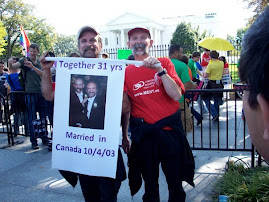
All this potential for conflict in laws and application of laws is coming to a head in a case in a federal court applying Iowa law (Iowa allows same-sex marriage) but involving parties that were married in a same-sex union in Toronto, Canada who are seeking to invoke a privilege derived from the federal rules of evidence that shields spouses from having to testify against one another. Confused yet?
In this case, the statute in question is the federal Defense Of Marriage Act (DOMA) passed by a Republican Congress and signed by Democratic President Bill Clinton. The most well-known provisions of the DOMA protect states that do not have same-sex marriage laws from being required to honor same-sex marriage laws passed (or more commonly enacted by their courts as common law implementations of Constitutional equal-protection provisions) in other states. A less-known but related provision protects states that have not endorsed same-sex marriage as well as the federal government itself from having to extend any federal law benefits or privileges derived from “marriage”. Thus, by default, any state provisions extending marriage rights to same-sex couples do not extend to courts in other states nor to federal courts. Thus, it would appear on its face that the privilege of spousal immunity does not apply and there is no shield of protection for same-sex partners in this case.
But wait! This is a case in federal court applying Iowa law. And Iowa law does recognize same-sex marriage as well as containing its own separate provisions for spousal privilege. And the marriage itself took place in Toronto, Canada, so it would seem to an amateur at least on its face that spousal privilege would apply, right? That’s the tentative conclusion that Volokh seems to come to.
But wait again! Same-sex marriage in Iowa is a common-law endorsement, created by the Iowa Supreme Court specifically overruling its legislature. So the protections derived from it would fall under any statute that both remains in force and conflicts with the common law marriage recognized by the Iowa Supreme Court. So, given the international character of the marriage itself and the conflict provided by the DOMA’s definition of what marriage is for purposes of federal law (which would presumably govern an international marriage), there’s no spousal privilege in this case, right?
But wait yet again! It turns out that the specific text of the Federal Rules of Evidence (a federal statute defining which privileges are recognized in federal courts) does not define spousal privilege, and instead simply allows state law to define which privileges will apply. So the DOMA might be completely irrelevant and the question would be whether Iowa law will apply (which gives spousal privilege to all couples, including same-sex couples), Canadian law (which presumably does as well, either through its common law roots or statutory code), or rather the state in which the same-sex couple in this case actually resides (which presumably does not, though the immediately available materials are unclear on this point).
But what yet again again! It turns out that some gay-rights advocates want the DOMA to apply to bar spousal privilege in this case so that they can use this case as an opportunity for a facial challenge to the Constitutionality of the DOMA on equal protection grounds. Their argument would probably be that the DOMA creates a situation where criminal defendants in a same-sex partnership would receive spousal privilege protections in some states, but not in others. This would deny them the equal protection of the laws required by the Fifteenth Amendment and thus render the DOMA itself unconstitutional and void. The individual risk to the defendant in this case is not as important to some activists as the opportunity to create a challenge to a DOMA law they find detestable. To them, the risk is worth the reward, especially since they themselves would bear none of the risk. Neat trick, that.
What a mess.
Setting aside the emotionally loaded issues that swirl around homosexuality and gay rights in modern politics, it is probably best to look at the underlying policy grounds for spousal privilege and simply decide if they are well-served by application to this case. The purpose of spousal privilege is to facilitate communication and trust between spouses (which is in the interest of the government as well for many reasons). Is any government interest served in keeping this narrow to deny its access to same-sex couples? Unless simply spiting same-sex couples is the goal, it is hard to see any government interest here. So it seems quite clear that the court can (given the swirling ambiguities in the statutory laws here) and should apply the privilege to bar the testimony in this case. The fact that same-sex couples want to submit themselves to the legal institution of marriage should be a benefit to society in how it stabilizes their relationships and brings them into line with other social and economic institutions. Other than socially conservative concerns grounded in religious belief systems, there is no good conservative argument against same-sex unions.
But the larger issue is that this specific case is not going to be the last problem with conflicts in laws raised by the issue of same sex marriage. The simple fact is that same-sex couples in stable, long-term relationships exist. Even those with personal moral codes that find their sexual activity to be repugnant can’t wish them away or have any hope or persuading them. And even the financial consequences of extending “marriage” claims on government benefits is probably outweighed by the benefits from the extension of the “marriage penalty” to their tax returns and the decrease in future litigation over contractual and other controversies resulting from legal ambiguities. After all, this case deals with just one potential issue of conflicting and ambiguous laws — spousal privilege. How about when complex litigation arises from conflicting interstate or international claims of spousal rights for wills, trusts, medical decisions, taxes, and contracts? This case is the tip of a very large legal iceberg.
Bottom line: Even conservatives applying an economic approach should see the wisdom of normalizing same-sex civil unions with full and equal rights and privileges under the law. The emotional objections of social conservatives just aren’t worth the cost and aggravation any longer. And the DOMA is a clumsy and obsolete tool for trying to deal with it. Its time is over.